It conjures up all sorts of images, like haunted homes, or cursed homes built on top of spiritual burial grounds or situated on a sinkhole. Your home with the death promise on it is the one trick or treaters are too afraid to go near on Halloween. A home is a place you're expected to pledge to reside in, not die.
In this case, when you obtain money to buy a house, you make a pledge to pay your loan provider back, and when the loan is paid off, the promise passes away. Obscure references aside, how well do you truly understand the rest of your house loan basics? It is very important to know the ins and outs of the lending process, the distinction in between set and variable, primary and interest, prequalification and preapproval.
So, with that, we prepared this standard primer on home mortgages and home mortgage. A home mortgage is a home loan. When you choose a home you 'd like to purchase, you're permitted to pay for a portion of the rate of the house (your deposit) while the lender-- a bank, credit union or other entity-- lets you obtain the remainder of the money.
Why is this process in location? Well, if you're wealthy enough to afford a home in money, a mortgage does not require to be a part of your monetary vernacular. But homes can be costly, and most individuals can't manage $200,000 (or $300,000, or $1 million) in advance, so it would be unfeasible to make you settle a home before you're allowed to move in.
The Basic Principles Of What Are The Interest Rates On Mortgages
Like many loans, a mortgage is a trust between you and your loan provider-- they've delegated you with money and are trusting you to repay it. Should you not, a secure is put into place. Until you pay back the loan completely, your house is not yours; you're simply living there.
This is called foreclosure, and it's all part of the agreement. Mortgages are like other loans. You'll never ever obtain one lump sum and owe the specific amount provided to you. 2 principles come into play: principal and interest. Principal is the primary amount obtained from your lending institution after making your down payment.
How nice it would be to take 30 years to pay that money back and not a cent more, however then, lending institutions wouldn't make any cash off of providing cash, and hence, have no incentive to work with you. That's why they charge interest: an additional, continuous cost charged to you for the chance to borrow money, which can raise your month-to-month home loan payments and make your purchase more expensive in the long run.
There are 2 types of mortgage loans, both specified by a various rates of interest structure. Fixed-rate mortgages (FRMs) have a rate of interest that stays the same, or in a fixed position, for the life of the loan. Traditionally, mortgages are offered in 15-year or 30-year payment terms, so if you obtain that 7-percent fixed-rate loan, you'll be paying the very same 7 percent without modification, regardless if rate of interest in the more comprehensive economy rise or fall over time (which they will). why reverse mortgages are a bad idea.
About What Is https://lorenzoaudg902.wordpress.com/2021/03/03/how-does-bank-know-you-have-mutiple-fha-mortgages-for-dummies/ The Current Interest Rate For Home Mortgages
So, you might start with 7 percent, however in a few years you might be paying 5. 9 percent, or 3. 7 percent, or 12. 1 percent - how are adjustable rate mortgages calculated.:+ Peace of mind that your rates of interest remains secured over the life of the loan+ Month-to-month home loan payments remain the same-If rates fall, you'll be stuck to your original APR unless you re-finance your loan- Repaired rates tend to be higher than adjustable rates for the benefit of having an APR that won't change:+ APRs on many ARMs may be lower compared to fixed-rate house loans, a minimum of initially+ A wide variety of adjustable rate loans are readily available-- for example, a 3/1 ARM has a fixed rate for the very first 36 months, adjustable thereafter; a 5/1 ARM, fixed for 60 months, adjustable sell r timeshare afterwards; a 7/1 ARM, repaired for 84 months, adjustable after-While your interest rate could drop depending on rates of interest conditions, it might increase, too, making regular monthly loan payments more costly than hoped.
Credit history typically vary between 300 to 850 on the FICO scale, from bad to outstanding, determined by three major credit bureaus (TransUnion, Experian and Equifax). Keeping your credit free and clear of financial obligation and taking the steps to improve your credit rating can certify you for the best home mortgage rates, fixed or adjustable.
They both share resemblances because being successfully prequalified and preapproved gets your foot in the door of that brand-new house, but there are some differences. Providing some standard financial information to a realty agent as you look around for a home, like your credit rating, existing income, any financial obligation you might have, and the quantity of cost savings you might have can prequalify you for a loan-- essentially a method of earmarking you beforehand for a low-rate loan prior to you've gotten it.
Prequalification is a basic, early action in the home loan process and doesn't involve a hard check of your credit report, so your score will not be impacted. Preapproval comes after you've been prequalified, however before you've found a house. It's a method of prioritizing you for a loan over others bidding for the very same property, based upon the strength of your financial resources, so when you do pursue the purchase of a home, most of the monetary work is done.
How Do Lenders Make Money On Reverse Mortgages Things To Know Before You Buy
In the preapproval procedure, your potential lending institution does all the deep digging and checking out your financial background, like your credit report, to validate the type of loan you could receive, plus the rates of interest you 'd receive. By the end of the process, you need to know precisely how much money the loan provider wants to let you obtain, plus a concept of what your home loan schedule will appear like.
Home mortgage candidates with a rating greater than 700 are best poised for approval, though having a lower credit rating won't instantly disqualify you from getting a loan. Cleaning up your credit will get rid of any doubt that you'll be authorized for the right loan at the ideal rates. When you have actually been authorized for a home loan, handed the secrets to your new house, relocated and began repaying your loan, there are some other things to keep in mind.
Your PMI is also a sort of security; the money your pay in insurance (on top of your principal and interest) is to make certain your lender earns money if you ever default on your loan. To prevent paying PMI or being perceived as a risky borrower, only buy a home you can manage, and aim to have at least 20 percent down before obtaining the rest.
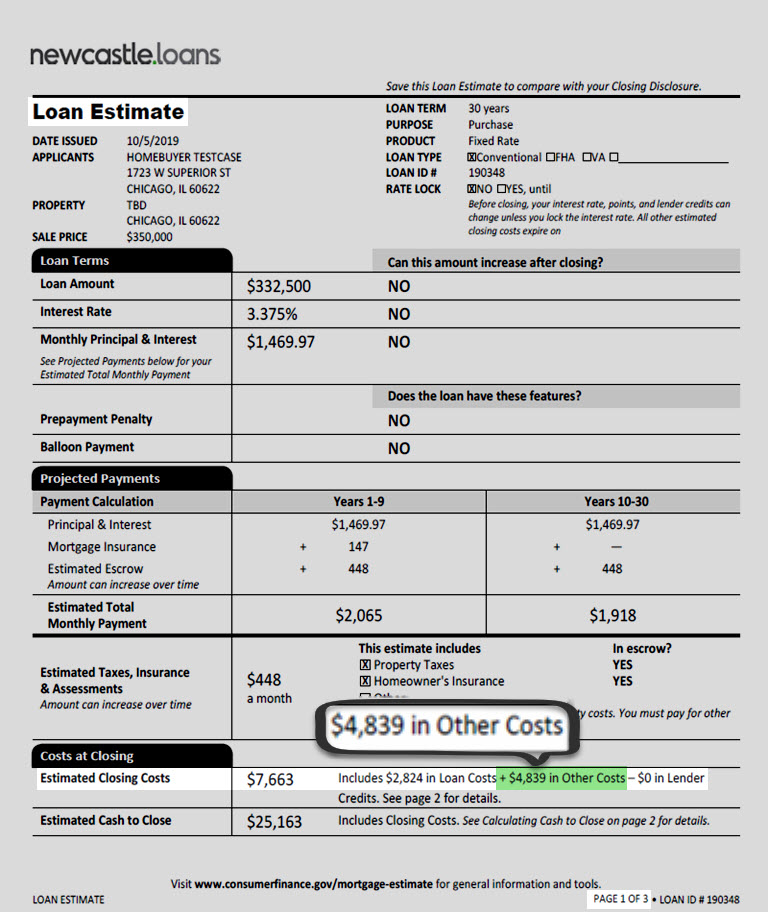
First, you'll be responsible for commissions and additional charges paid towards your broker or realty representative. Then there'll be closing costs, paid when the mortgage procedure "closes" and loan repayment begins. Closing expenses can get pricey, for absence of a much better word, check here so brace yourself; they can range between 2 to 5 percent of a house's purchase rate.